
- English
- Español
- Português
- русский
- Français
- 日本語
- Deutsch
- tiếng Việt
- Italiano
- Nederlands
- ภาษาไทย
- Polski
- 한국어
- Svenska
- magyar
- Malay
- বাংলা ভাষার
- Dansk
- Suomi
- हिन्दी
- Pilipino
- Türkçe
- Gaeilge
- العربية
- Indonesia
- Norsk
- تمل
- český
- ελληνικά
- український
- Javanese
- فارسی
- தமிழ்
- తెలుగు
- नेपाली
- Burmese
- български
- ລາວ
- Latine
- Қазақша
- Euskal
- Azərbaycan
- Slovenský jazyk
- Македонски
- Lietuvos
- Eesti Keel
- Română
- Slovenski
- मराठी
- Srpski језик

高圧変圧器にとって絶縁品質が重要なのはなぜですか?
Introduction
In modern power transmission and distribution systems, insulation quality is one of the most decisive factors affecting safety, efficiency, and service life. For high-voltage applications, even minor insulation weaknesses can lead to catastrophic failures, costly outages, and long-term operational risks. This is why global utilities and EPC contractors place such strong emphasis on insulation system design and material selection when sourcing a Power Transformer.
At LUGAO POWER CO.,LTD., decades of engineering practice have shown that insulation performance is not a single parameter, but a complete system integrating electrical, thermal, and mechanical reliability. From material purity to manufacturing process control, our approach focuses on long-term stability under real grid conditions. In our factory, every transformer is designed to withstand voltage stress, temperature fluctuation, and environmental impact across its full service lifecycle.
Table of Contents
- What Electrical Risks Do High-Voltage Transformers Face Without Proper Insulation?
- How Does Insulation Design Influence the Long-Term Reliability of a Power Transformer?
- Why Do Material Selection and Manufacturing Control Matter in Insulation Systems?
- Summary
- FAQ
What Electrical Risks Do High-Voltage Transformers Face Without Proper Insulation?
High-voltage power networks operate under extreme electrical stress. In such environments, insulation acts as the primary defense barrier separating conductive components and controlling electric field distribution. Without high-quality insulation, a Power Transformer becomes vulnerable to partial discharge, dielectric breakdown, and thermal runaway.
At LUGAO POWER CO.,LTD., our engineering teams evaluate insulation performance starting from voltage stress analysis. Our experience shows that insulation failure rarely occurs suddenly. Instead, it develops gradually due to localized defects, aging materials, or moisture ingress. Our factory implements multi-stage testing to identify these risks early.
Key electrical risks caused by insufficient insulation quality include:
- Partial discharge initiation at sharp edges or voids inside insulation layers
- Electric field concentration leading to accelerated material degradation
- Internal arcing between windings or between winding and core
- Sudden dielectric breakdown during switching or lightning impulse events
Each of these risks directly reduces operational reliability. In a high-voltage power transformer, insulation must withstand not only rated voltage but also transient overvoltages that exceed nominal values. Our insulation systems are designed to maintain stable dielectric strength under both steady-state and impulse conditions.
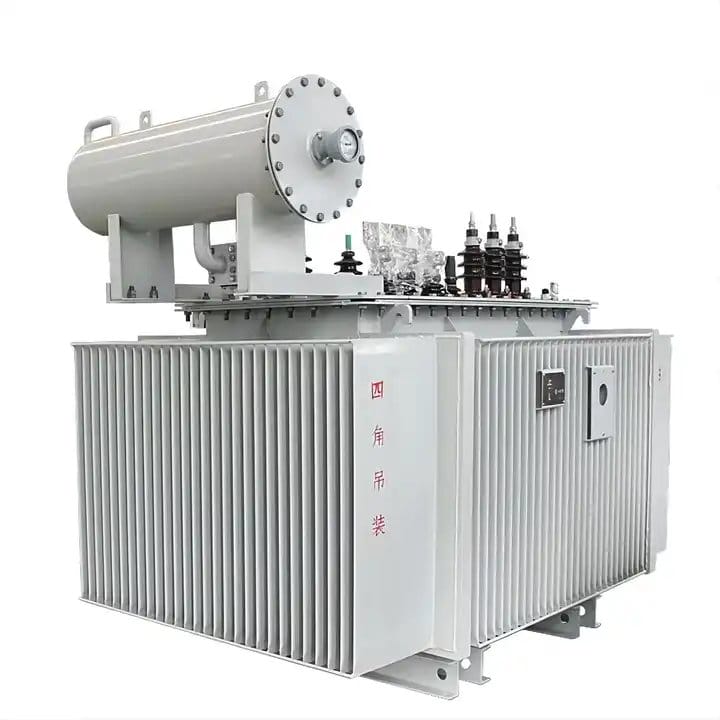
Typical insulation performance parameters considered during design include:
| Rated voltage class | Up to 500 kV and above depending on application |
| Lightning impulse withstand voltage | Customized according to IEC and IEEE standards |
| Power frequency withstand voltage | Designed with safety margin above operating levels |
| Partial discharge level | Controlled below standard limits under test conditions |
Our design philosophy ensures that insulation integrity is preserved even under long-term electrical stress. This approach is a key reason utilities rely on LUGAO for mission-critical grid equipment.
How Does Insulation Design Influence the Long-Term Reliability of a Power Transformer?
Insulation design is not limited to selecting materials. It involves electric field modeling, thermal coordination, mechanical reinforcement, and aging analysis. In a high-voltage Power Transformer, insulation must perform consistently for decades under continuous load cycles. At LUGAO POWER CO.,LTD., our design process integrates simulation and empirical data from operating units. Our engineers focus on balancing electrical strength with heat dissipation efficiency. Our factory production lines follow standardized insulation layering techniques to ensure uniformity and repeatability.
A robust insulation design contributes to long-term reliability in several ways:
- Maintaining dielectric strength under thermal expansion and contraction
- Preventing moisture absorption that reduces insulation resistance
- Ensuring mechanical stability during short-circuit events
- Reducing localized overheating caused by uneven electric fields
Oil-immersed insulation systems remain widely used due to their excellent cooling and dielectric properties. Our oil-paper insulation structures are engineered to minimize aging rates by controlling temperature rise and oxygen exposure. This approach allows our Power Transformer products to maintain stable performance throughout their service life.
Key insulation-related design parameters include:
| Insulation class | Designed for continuous operation under specified thermal limits |
| Temperature rise limit | Optimized for long-term insulation aging control |
| Oil quality standard | High-purity transformer oil with low moisture content |
| Winding insulation structure | Multi-layer paper and pressboard coordination |
By integrating these factors, our insulation systems deliver predictable reliability. This is one of the reasons why LUGAO POWER CO.,LTD. continues to support large-scale transmission projects worldwide.
Why Do Material Selection and Manufacturing Control Matter in Insulation Systems?
Even the best insulation design can fail if material quality or manufacturing consistency is compromised. High-voltage insulation systems depend on material purity, dimensional accuracy, and process discipline. For this reason, material selection and production control are core priorities in our factory.
At LUGAO POWER CO.,LTD., insulation materials are sourced from qualified suppliers and subjected to incoming inspection. Our production teams follow controlled drying, impregnation, and assembly processes to eliminate internal voids and moisture. This level of control ensures that every Power Transformer leaving our facility meets the same high insulation standards.
Critical material considerations include:
- Cellulose paper density and uniform thickness
- Pressboard mechanical strength and oil absorption stability
- Transformer oil dielectric strength and oxidation resistance
- Compatibility between solid and liquid insulation components
Manufacturing control further determines insulation performance consistency. Our factory uses vacuum drying and oil filling processes to achieve low moisture content. This significantly improves dielectric strength and slows insulation aging. Our experience shows that precise process control can extend transformer service life by many years.
Typical factory quality control checkpoints include:
| Moisture content after drying | Maintained within strict internal limits |
| Vacuum oil filling pressure | Optimized to eliminate trapped air |
| Final insulation resistance test | Verified before routine and type testing |
| Partial discharge verification | Confirmed under specified voltage conditions |
Through disciplined material and process management, LUGAO POWER CO.,LTD. delivers insulation systems that perform reliably under real operating conditions, protecting both equipment investment and grid stability.
Summary
Insulation quality is the foundation of safety and durability in high-voltage applications. From electrical risk control to long-term aging management, every aspect of insulation design and manufacturing directly affects the performance of a Power Transformer. By combining advanced design practices with strict material selection and production control, LUGAO POWER CO.,LTD. ensures dependable operation across diverse grid environments.
If you are planning a new substation project or upgrading existing transmission infrastructure, choosing equipment with proven insulation systems is essential. Our team is ready to support your technical evaluation and provide tailored transformer solutions that align with your operational requirements. Contact LUGAO POWER CO.,LTD. today to discuss your project specifications and discover how our insulation-focused transformer solutions can enhance grid reliability and operational confidence.
FAQ
Q1: Why Is Insulation Quality Vital for High-Voltage Power Transformers?
High-quality insulation prevents electrical breakdown, controls electric field distribution, and ensures safe long-term operation under high voltage and transient stress conditions.
Q2: Why Is Insulation Quality Vital for High-Voltage Power Transformers in Long-Term Grid Operation?
Reliable insulation slows aging, reduces maintenance frequency, and minimizes unexpected outages over decades of continuous service.
Q3: Why Is Insulation Quality Vital for High-Voltage Power Transformers During Overvoltage Events?
Proper insulation withstands lightning and switching impulses, protecting internal windings and preventing catastrophic failure.
Q4: Why Is Insulation Quality Vital for High-Voltage Power Transformers in High-Temperature Environments?
High-grade insulation maintains dielectric strength under elevated temperatures, reducing thermal degradation and extending service life.
Q5: Why Is Insulation Quality Vital for High-Voltage Power Transformers in Utility Investment Planning?
Superior insulation lowers lifecycle costs by reducing repair risks, improving reliability, and protecting long-term capital investment.